
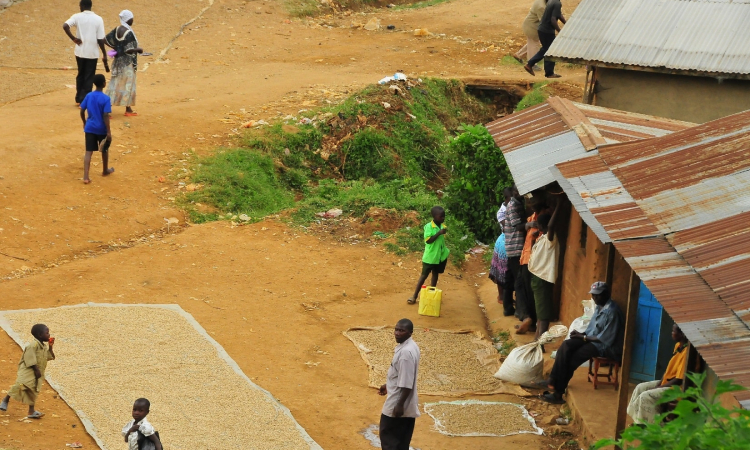
Around the slopes of Mount Elgon and the outskirts of Mount Elgon National Park live different tribes that have a deep spiritual connection to the land. They also carry out many activities on its fertile soils.
One of the main tribes is the Bagisu, also known as the Bamasaba. They are the largest group living on the slopes of Mount Elgon, mainly in Mbale, Sironko, Bududa, and Manafwa districts. The Bagisu are well known for their Imbalu ceremony, which is the ritual of circumcision. This rite marks the passage of boys into adulthood. Unlike other communities where circumcision is done privately for medical reasons, among the Bagisu it is performed publicly as a cultural event.
The Bagisu are also subsistence farmers. They grow Arabica coffee on the mountain slopes and other crops such as bananas, beans, and maize. Their cultural dance, the Kadodi, is an energetic performance that takes place during the Imbalu ceremony. The Bagisu speak Lugisu, which is an important part of their cultural identity.
Another well-known tribe is the Sabiny, who live on the southeastern slopes of Mount Elgon, mainly in Kapchorwa District. The Sabiny are part of the Kalenjin group, which extends into Kenya. Although they share the slopes of the mountain with the Bagisu, their traditions are different. In the past, the Sabiny practiced female circumcision, also called Female Genital Mutilation (FGM). This was seen as a way of preparing girls for womanhood and marriage.
Today, the practice has been largely abandoned because of the serious health risks it causes. The Sabiny are farmers and are also recognized for producing some of the best runners in Uganda, making athletics a source of pride for their community. Their language is Kupsabiny, and their cultural dance is called Chekwoyet, both of which represent their cultural heritage.
In conclusion, the two main tribes around Mount Elgon, the Bagisu and the Sabiny, play an important role in protecting both their culture and the ecosystems of the region.


