
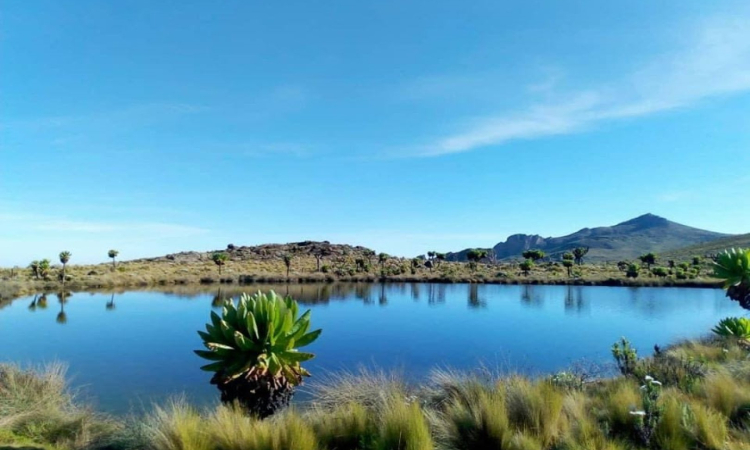
The Sasa trail is the shortest route to the Mount Elgon caldera from the Ugandan side, although it is very steep. The Sipi trail is another option with good views, but it is longer. From the Kenyan side, trekkers can use the Sirimon route to reach the caldera.
Mount Elgon has several unique features, including Wagagai Peak, which stands at 4,321 meters and is the eighth highest peak in Africa. It lies on the Ugandan side and is a popular goal for trekkers. From Wagagai, visitors enjoy wide views of the park stretching across both Uganda and Kenya.
The caldera floor is a wide swampy plain rich in plants and animals. It also has gorges such as Suam Gorge, rivers, and hot springs formed by volcanic activity. On the lower slopes of the mountain, there are caves such as Kitum Cave in Kenya, which was formed by volcanicity. Elephants often visit these caves to lick salt. These caves are also interesting exploration sites for visitors.
Inside the caldera are Jackson’s Pool and Jackson’s Peak, crater lakes named after the early explorer Frederick Jackson.
Mount Elgon also has cultural importance to the Bagisu of Uganda and the Sabaot of Kenya. The Bagisu believe their ancestor Masaba came from the mountain. The area is also home to elephants, buffaloes, monkeys, and more than 300 bird species that live in the montane forests.
The mountain acts as a major water catchment because of the high rainfall it receives, which feeds surrounding rivers and lakes.
The best time to visit is during the dry months from June to August and December to March, when trails are dry and easier to hike. Visitors should pack both light and warm clothes, as conditions change with altitude. Permits for trekking should be booked early, especially in the peak season, and all treks must be done with guides.


