
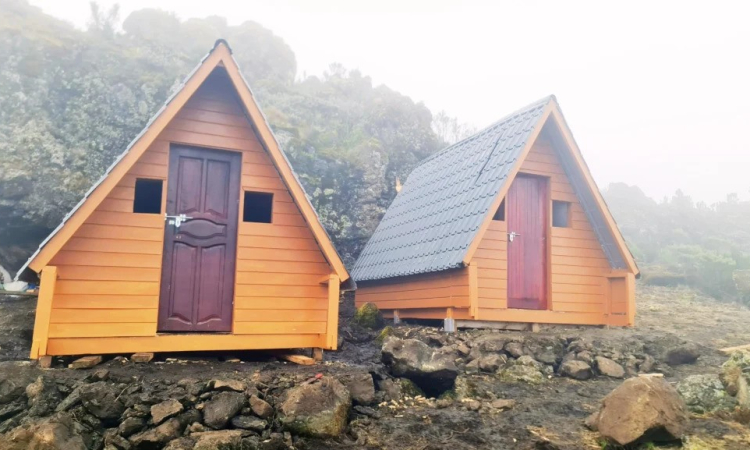
Masaba Camp is located on the caldera of Mount Elgon and serves as a good base for trekkers heading to Masaba Peak at 4,152 meters and Wagagai Peak at 4,321 meters. The camp is named after Masaba, a legendary ancestor of the Bamasaba people, who are believed to have originated from the mountain.
The camp can be reached using the Sasa Trail, which is the most direct route starting from Budadiri. Other options include the Bushiyi Trail and the Sipi Trail. The camp has basic facilities such as mountain huts, tents, and semi-open caves used for shelter. Pit latrines and cooking shelters are also available.
From the camp, trekkers enjoy views of the caldera and the surrounding peaks. Evenings are often spent around campfires, where trekkers and guides interact. Temperatures at night can drop to freezing levels, so packing warm clothes such as jackets, gloves, socks, and headwraps is highly recommended.
The best time to visit Mount Elgon is during the dry months of December to March and June to August. During this time, the trails are less muddy and easier to climb, and the skies are clear. This is also the peak season, so it is important to book trekking permits in advance through Elgon Trekking Services or the Uganda Wildlife Authority.
The wet season, from March to May and September to November, brings lush scenery and is excellent for photography, with many migratory and resident birds present. Prices are often lower at this time, but trekking is more difficult due to slippery trails.
Hiking to Masaba Camp requires preparation and physical fitness. Training such as hill climbing or stair climbing for about 30 minutes a day helps prepare the body for the trek. Visitors can also add experiences like coffee tours around Mount Elgon or visits to Sipi Falls.
From Masaba Camp, trekkers can climb to Masaba Peak and continue to Wagagai Peak. They can also explore the caldera, hot springs, gorges, rivers, and even cross into Kenya to visit Kitum Cave.
Masaba Camp is more than just a stopover. It offers trekkers a full experience of Mount Elgon’s landscape, culture, and adventure.


