
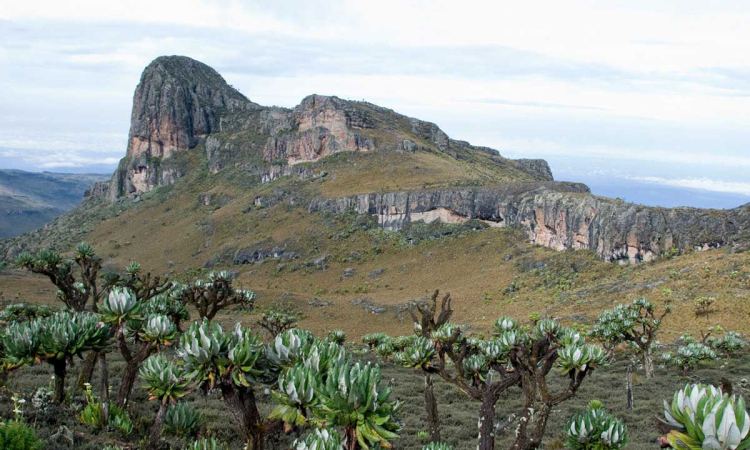
Mukoola Ridge is one of the unique natural features found in Eastern Uganda, near Mbale, within Mount Elgon National Park.
The ridge lies at an altitude of about 9,455 feet. It was formed millions of years ago through volcanic activity that also created Mount Elgon. While rain and wind eroded the softer rocks, the harder rock of Mukoola remained, standing tall on its own.
One of the special features of Mukoola Ridge is the presence of rare plants known as Encephalartos whitelockii, a type of cycad. These plants grow in rocky areas, develop slowly, and can live for many years. They have short trunks, stiff green leaves, and deep roots that search for water within the rock.
Mukoola Ridge is a popular hiking spot, and many trekkers reach it through the Sasa Trail. From the ridge, there are clear views of the surrounding hills and valleys. To make the experience more meaningful, it is recommended to hike with a knowledgeable guide who can explain the ridge’s formation, plants, and cultural value.
For the Bagisu people, the ridge has deep spiritual meaning. They call it Bumasifwa and believe it is the home of their ancestral spirits. In the past, they visited the ridge to pray for protection, rain, and good health for their families.
Today, Mukoola Ridge faces challenges such as climate change and population growth in nearby areas. However, local people and the government of Uganda are working together to conserve it, aiming to preserve both its cultural importance and natural environment for future generations.
The best time to hike the ridge is during the dry months of June to August and December to February, when the trails are easier to climb. Sturdy hiking shoes and proper gear are important for comfort and safety.
Mukoola Ridge is not only a natural feature but also a cultural landmark, reminding us of the history of the earth and the traditions of the people who live around Mount Elgon.


