
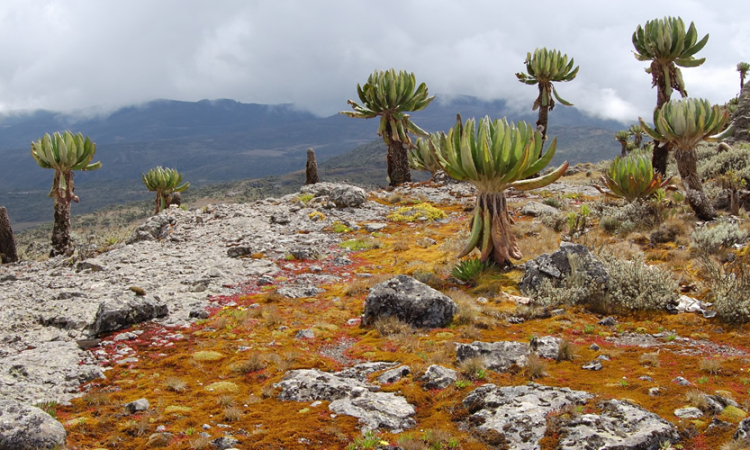
How big is Mount Elgon National Park? Mount Elgon covers about 4,000 square kilometers, making it one of the largest volcano bases in the world. The summit rises to 4,221 meters, ranking as the fourth highest in East Africa and the eighth highest in Africa. The caldera is about 40 square kilometers in size and gives wide views of the park and surrounding areas.
Mount Elgon National Park lies on the border between Uganda and Kenya, covering about 1,279 square kilometers in total. The Ugandan side makes up 1,145 square kilometers, while the Kenyan side covers 169 square kilometers of the park and 721 square kilometers as a national reserve.
The mountain is divided into vegetation zones. The montane forest, between 2,000 and 2,500 meters, has dense forests with cedars, Elgon teak, moss, and epiphytes. From 2,500 to 3,000 meters is the bamboo zone with wide belts of bamboo.
The moorland, between 3,000 and 3,500 meters, has open areas with giant heathers, lobelias, and groundsels. Above 3,500 meters is the high moorland, which has sparse shrubs, the summit, and the caldera. Each zone supports unique plants and animals.
Mount Elgon receives heavy rainfall, which makes it an important water catchment. The volcanic rocks store water that feeds rivers such as the Nzoia, which flows into Lake Victoria, and the Suam, which joins the Turkwel River. Other rivers flow into Lake Kyoga and later the Nile Basin.
The mountain also has many caves formed by volcanic activity and erosion. Kitum Cave, stretching 200 meters into the mountain, is known for elephants and buffaloes that lick salt from its walls. Tourists visit these caves for exploration and adventure.
The park’s size allows seasonal wildlife movement between Uganda and Kenya. It is home to elephants, buffaloes, over 300 bird species, and supports cultural activities such as visits to the Bagisu people to learn about their traditions. Hiking to the peaks and exploring the caldera are among the main attractions.
Mount Elgon is a vast mountain with unique features, a rich ecosystem, and an important role as a water tower for rivers and lakes in the region.


