
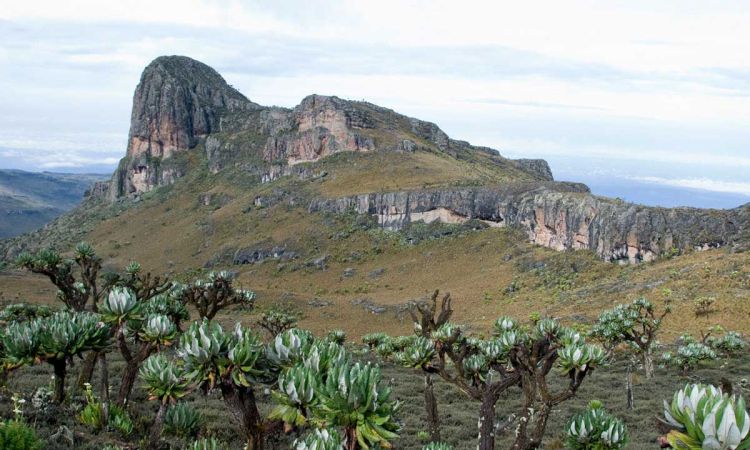
History of Mount Elgon National Park – Mount Elgon lies on the border of Kenya and Uganda. It is an extinct volcano that erupted about 24 million years ago, making it one of the oldest mountains in East Africa.
Long ago, it was higher than Mount Kilimanjaro but has since eroded to 4,321 meters, ranking as the fourth highest mountain in East Africa. With a diameter of 80 km, it is the largest volcanic mountain in the world.
The mountain has been home to tribes such as the Bagisu or Bamasaba in Uganda and the Sabaot in Kenya. They believe the mountain represents their ancestor Masaba. They farmed on its fertile slopes and carried out rituals in its caves and peaks.
In the 20th century, European colonialists were drawn to the mountain’s rich forests and fertile lower slopes, which they saw as suitable for large-scale farming of crops like coffee and tea. They also recognized the importance of Mount Elgon as a water source.
In 1929, the Kenyan side was gazetted as Mount Elgon Crown Forest Reserve, while in 1938 the Ugandan side was declared a controlled hunting area to help preserve its resources.
By 1962, the Ugandan government upgraded the forest reserve into a national park to protect wildlife from poaching, promote tourism, and prevent land encroachment. Management later passed to Uganda Wildlife Authority, which still oversees it today. On the Kenyan side, the reserve was combined and officially declared a national park in 1968, now managed by Kenya Wildlife Service.
This transition was not smooth, as conflicts arose with local communities who feared losing their ancestral lands. This led to human-wildlife clashes and illegal activities. Despite these challenges, Mount Elgon remains rich in biodiversity, with over 12 large animal species, more than 300 bird species, unique caves, bamboo, moorland, heath, and several peaks.
In short, the history of Mount Elgon begins with ancient volcanic activity, continues through cultural traditions and colonial interest, and today stands as a protected area that conserves wildlife and landscapes for future generations.


